
Loading...
Serving Newark, OH and surrounding areas. (740) 322-4165
Walking barefoot on wet grass around a pool is a slip hazard. A properly built pool deck gives you a safe, finished surface that holds up through Ohio winters - and passes city inspection.
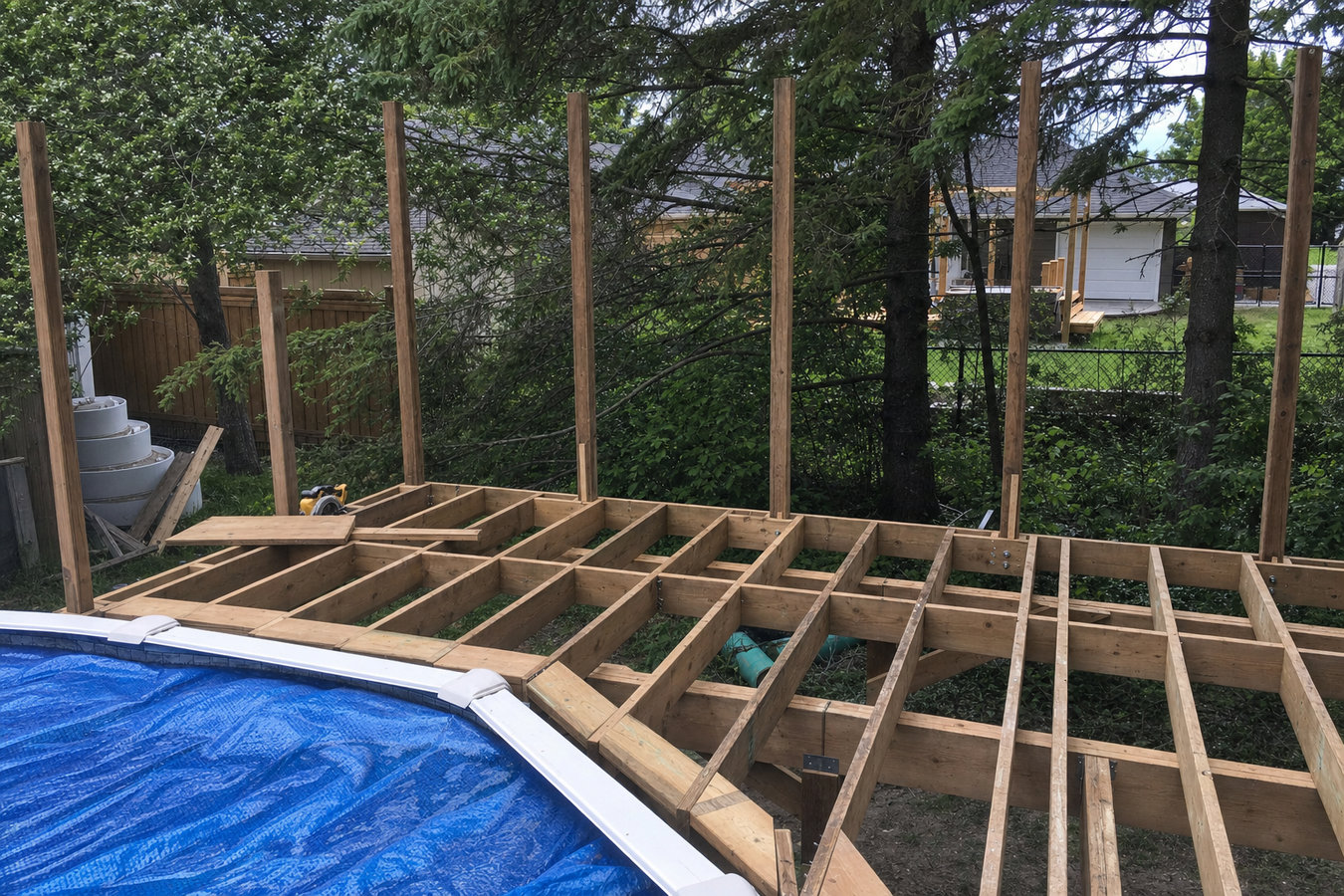
Pool deck construction in Newark, OH involves excavating and preparing a graded base, then installing concrete, pavers, or composite surfacing around your pool, most residential projects take one to three weeks from permit approval to completion depending on material and site conditions.
If you have an in-ground or above-ground pool in Newark without a proper deck around it - or with a deck that has seen too many central Ohio winters - this is one of the projects where doing it right from the start matters most. A pool deck that is not graded properly holds water. One built without proper base preparation on Newark's clay soil will start cracking within a few years. Both problems get expensive. The same attention to site conditions that goes into a well-built custom deck applies here - maybe more so, because the surface is wet every day it is used.
The good news is that a pool deck built with the right materials and a proper gravel base can last 25 to 40 years in Ohio's climate. The key variables are the surface material you choose, how well the base is prepared for local soil conditions, and whether the deck is sealed and maintained on a regular schedule. We cover all three as part of every project we take on in Newark.
If you have filled cracks in your pool deck before and they keep reopening - especially after winter - that is a sign the underlying base has shifted or the deck was not built to handle Ohio's freeze-thaw cycles. Cracks that run all the way through the slab, or that are getting wider each year, mean the deck is failing structurally. At that point, patching is just delaying the inevitable.
Walk out to your pool deck after a good rain and look for spots where water sits instead of draining away. Standing water is a slip hazard, and it works its way into the concrete or between pavers, accelerating the freeze-thaw damage that Newark winters cause. If your deck was not graded properly when it was built - or if it has settled unevenly over the years - it needs to be replaced or significantly repaired.
Tap on different sections of your concrete deck. A solid slab sounds dense; a section that has separated from the base sounds hollow. Hollow spots mean the deck is no longer fully supported and can crack or collapse under weight. Uneven sections are also a tripping hazard and a sign the base has shifted - which is common in Newark's clay-heavy soil.
If your pool deck was installed in the 1990s or earlier and you cannot remember it being professionally sealed, it has likely absorbed years of water, pool chemicals, and freeze-thaw stress. At a certain point, the concrete becomes porous enough that sealing alone will not protect it. If you are also seeing surface flaking, widespread discoloration, or multiple cracks, a full replacement will cost less in the long run than repeated repairs.
We build pool decks using brushed concrete, stamped concrete, concrete pavers, and composite decking - each with its own tradeoffs in cost, look, and long-term maintenance. Brushed concrete is the most common choice for Newark homeowners because it is durable, provides good grip when wet, and holds up well against Ohio's freeze-thaw cycles when properly sealed. Pavers offer more design flexibility and are easier to repair in sections, though they cost more upfront. We walk through the specific tradeoffs for your pool and yard before you commit to a material.
If you are also considering adding privacy or a safety barrier around your pool area, a vinyl fence installation pairs well with a new pool deck project and can often be scheduled in the same visit. For homeowners building out a larger backyard space, we can also discuss how the pool deck connects to adjacent decking, patio covers, or other outdoor structures so the whole design works together from the start.
Best for homeowners who want a durable, non-slip surface at a straightforward price point with minimal long-term maintenance.
Best for homeowners who want the look of stone or pavers without the higher material cost, with texture options that still provide grip when wet.
Best for homeowners who want a custom look and the ability to replace individual sections if a paver shifts or cracks over time.
Best for above-ground pools or smaller surrounds where a wood-look composite surface pairs well with an adjacent deck structure.
Newark sits in Licking County, where the soil has a high clay content - a result of the glacial deposits that cover most of central Ohio. Clay soil expands when it gets wet and shrinks when it dries, and that movement puts real stress on anything built on top of it. A pool deck contractor who does not account for this - through proper base compaction, the right gravel layer, and well-placed expansion joints - is setting you up for cracking and uneven sections within a few years of installation. The Newark Building Department requires permits and inspections precisely because this kind of site work is where projects go wrong when it is rushed or skipped.
Newark also averages around 38 inches of rain per year, with the wettest months typically from April through June - right when most homeowners want pool projects done. Rain during or shortly after a concrete pour can damage the surface and weaken the slab, so scheduling around the forecast matters. Homeowners in Hebron and Pataskala face the same conditions, and the best contractors in the area plan for weather delays as a normal part of any spring pool deck project. According to the Pool and Hot Tub Alliance, surface texture is one of the most important safety considerations for any pool deck - and it is one of the first decisions we walk you through during the estimate.
We ask about your pool size, preferred material, and whether there is an existing deck to remove. We schedule a free on-site visit to measure the area and get a clear picture of what the job involves. You receive a written estimate that breaks down materials, labor, and permit fees separately.
Before any work begins, we apply for a building permit through the City of Newark's Building Department. This typically takes a few business days to a couple of weeks. You do not need to do anything during this step - we handle the paperwork - but we recommend keeping a copy of the permit for your records.
Once the permit is approved, we prepare the area - demolishing and removing any old deck if needed, then excavating, compacting the base, and laying a gravel layer underneath. This base work is what determines how well your deck holds up against Newark's clay soil and winter freeze-thaw cycles. We walk you through what we are doing and why.
For concrete, we set up forms, place reinforcement, and pour in sections - typically in one day for a standard residential deck. Pavers take two to four days. After curing, a city inspector verifies the work meets Newark's building requirements. We schedule the inspection and are present for it, then walk you through the finished deck.
We respond within one business day. No commitment required - just a straight answer on what the project involves and what it will cost.
(740) 322-4165We have worked in Newark and the surrounding area long enough to know how clay-heavy soil behaves through Ohio seasons. Every pool deck we build starts with proper base compaction, the right gravel layer, and expansion joints designed to give the slab room to move - because a deck built without this will start showing cracks within a few years.
Every pool deck project we take on in Newark goes through the city's permit and inspection process. This is not optional for structural work, and it matters for your home's value and safety. We handle all the paperwork - you never need to deal with the Building Department yourself.
Poor drainage is the most common reason pool decks fail early in central Ohio, where heavy spring rains and flat yards make runoff a real issue. We grade every deck we build so water drains away from your pool and your home's foundation - not toward them. The{' '}Pool and Hot Tub Alliance recommends positive drainage as a basic design requirement for any pool surround.
One of the biggest concerns homeowners have when hiring a contractor is that the final bill will look nothing like the estimate. We assess your deck's actual site conditions before we give you a number - so the price you are quoted covers materials, labor, permit fees, and cleanup with no surprises.
Pool decks built without proper permits, base preparation, or drainage grading are one of the most common sources of homeowner frustration in the Newark area. We take all three seriously on every project, because those are the details that determine whether your deck is still looking good in 15 years or cracking in five.
Add a low-maintenance vinyl fence around your pool area for privacy, safety, and a finished backyard look that holds up through Ohio winters.
Learn MoreExtend your pool deck into a larger outdoor living space with a custom-designed deck built to connect with your pool surround.
Learn MoreSummer project slots book fast - reach out now for a free written estimate and get on the schedule before the spring rush.