
Loading...
Serving Newark, OH and surrounding areas. (740) 322-4165
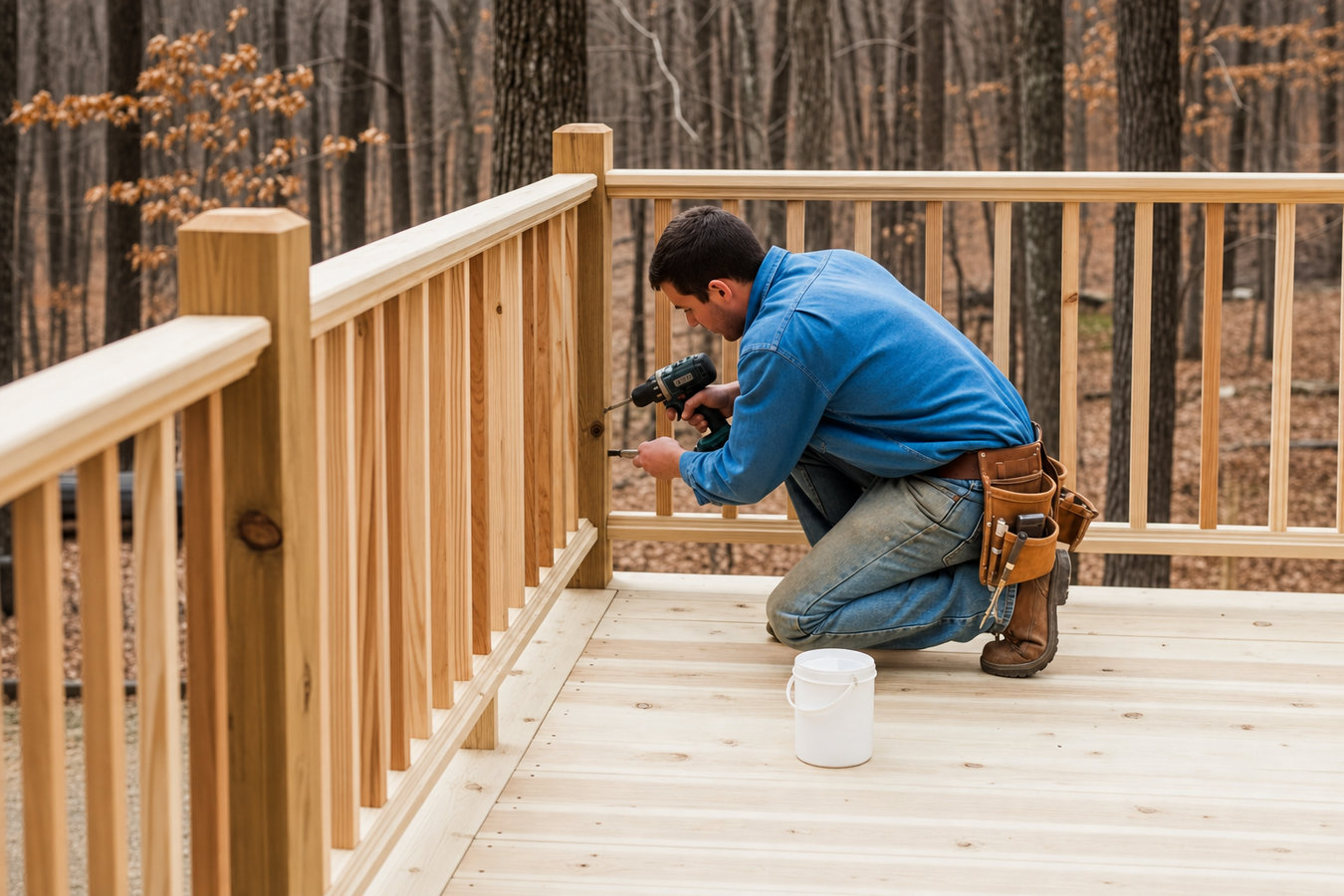
A railing that passes inspection today and still feels solid five winters from now takes more than just screwing boards together. We install deck railings in Newark that meet Ohio code, hold firm through freeze-thaw cycles, and come with permits handled from start to finish.
Deck railing installation in Newark, OH involves removing the old railing if one exists, setting new posts anchored to the deck frame, attaching top and bottom rails, and installing the vertical balusters at code-required spacing - most standard jobs take one to two days of active work once the permit is approved.
In Ohio, any deck that sits 30 inches or more above the ground is required by law to have a railing. For Newark homeowners with older decks, that means a railing that was built before current standards may no longer meet the height requirements or baluster spacing rules that Ohio code now enforces. We have been installing and replacing deck railings in Newark and Licking County since 2017, and we know the permit process, the inspection requirements, and the material choices that hold up in this climate.
Railing work often connects naturally to a broader deck project. Homeowners who are replacing a railing on an aging deck sometimes find it makes more sense to pair the railing replacement with a full deck repair and replacement rather than investing in a new railing on a deck frame that will need attention in a year or two anyway.
Stand at the edge of your deck and give the top rail a firm push. If it moves, shifts, or feels loose at the post, the railing is no longer doing its job. This is the single most important thing to check, and a wobbly railing should be addressed before anyone uses the deck again. Licking County's freeze-thaw winters can gradually work post footings loose over time, even on railings that were originally installed correctly.
Press your thumb firmly into the wood at the base of each post and along the bottom rail. If the wood feels spongy, crumbles, or has turned dark gray or black, rot has set in. Given Newark's humid summers and wet springs, this kind of deterioration is common on decks that have not been sealed regularly - and once rot reaches the posts, the whole railing needs to come out.
Crouch down and look at the spacing between the vertical pieces. If you can fit your fist through the gap, the spacing is too wide by today's safety standards. This is a common issue on decks built in the 1970s and 1980s, which make up a significant portion of Newark's housing stock. Wide gaps are a safety hazard for children and a code violation that will surface during a home sale inspection.
If a home inspector flagged your railing during a sale, refinance, or insurance renewal, that note does not go away on its own. Newark's Building Department can also cite unsafe railings during routine inspections. Addressing it proactively is almost always cheaper and less stressful than waiting for it to become a condition of a sale or an insurance claim.
We install wood, composite, and aluminum railings on new decks and as replacements on existing structures, including porch railing replacements. Every installation meets Ohio's height requirements (at least 36 inches for most residential decks) and the baluster spacing rule that prevents a 4-inch sphere from passing through. We also check the deck frame while we are working - if we see joists, ledger boards, or rim boards that have softened, we flag that before it becomes a bigger problem. The permit and inspection process is handled by our crew, not handed off to you.
Railing replacement is also a natural time to evaluate the rest of your outdoor space. If the deck frame is in good shape, a new railing gives the whole structure a fresh look and years more useful life. If the frame has issues, combining the railing work with a broader custom deck design and build often makes more financial sense than investing in a new railing on a deck that is close to the end of its life. We give you a straight answer on which path fits your situation.
Suits homeowners who want the most budget-friendly option and are comfortable maintaining the wood with staining or sealing every few years.
Suits homeowners who want a natural wood look with built-in rot resistance and a cleaner appearance than pressure-treated lumber.
Suits homeowners who want a wood-like appearance with very low maintenance - no staining, sealing, or painting required.
Suits homeowners in shaded or damp yards where wood deteriorates faster, or anyone who wants a modern look with zero upkeep.
Licking County experiences significant freeze-thaw cycling every winter, where the ground freezes and thaws repeatedly between November and March. This movement can gradually loosen post footings over time - even on railings that were originally installed correctly. It is a good habit for Newark homeowners to push on each post every spring before the deck season starts, and it is the reason we anchor posts with proper hardware rated to resist that kind of movement. We serve homeowners throughout Newark and nearby communities including Heath and Johnstown, where the same freeze-thaw soil conditions apply.
A large share of Newark's homes were built between the 1940s and 1980s, meaning many existing decks have railings that were installed to older, less stringent standards. Railing height, baluster spacing, and post anchoring have all changed under Ohio's residential code in the decades since. If your home is in one of Newark's older neighborhoods, there is a real chance your current railing would not pass today's inspection - which matters both for safety now and for your home's value when you sell. Newark's wooded neighborhoods also accelerate wood deterioration, making material selection more important than it might seem at the time of installation. The American Wood Council DCA6 guide provides the prescriptive standards for residential deck construction, including railing post connections, which we follow on every project.
Call or submit the contact form and you will hear back within one business day. We ask a few basic questions - how high your deck sits off the ground, roughly how many feet of railing you need, and whether you have a material preference - so we can come prepared.
We come to your home, measure the deck, and look at the existing structure. We check whether the deck framing can support new posts and talk through material options in plain terms. We tell you upfront whether a permit is required - and we are the ones pulling it.
Once you agree on scope and sign a contract, we submit for the permit. In Newark, residential permits typically take a few days to a couple of weeks. We keep you updated on timing - this step is normal and protects you, so do not let anyone talk you into skipping it.
Most standard railing jobs are completed in one full day. We remove the old railing if needed, set new posts, attach rails, and install all the vertical pieces. After installation, a city inspector verifies the work. Walk the finished railing with us before we leave - push every post, check the spacing, and ask any questions you have.
We handle the permit, the inspection, and the installation - you just need to tell us what you need and we will give you a written estimate within a day.
(740) 322-4165Licking County winters loosen post footings on railings that were not anchored with the right hardware. We set posts with hardware rated to resist the movement that Ohio winters cause - so you are not tightening loose posts every spring. That detail is what separates a railing that holds firm for years from one that gradually works itself loose.
We pull all permits through the City of Newark and coordinate the inspection after installation. You do not navigate the Building Department on your own. A permitted railing is documented proof the work meets Ohio code - which matters when your home is inspected for a sale, a refinance, or an insurance review.
We help you choose the right material for your specific yard - shaded lots near Newark's mature tree canopy are harder on wood railings than open sunny yards. Composite and aluminum options often make more practical sense in those settings. We explain the real trade-offs before you decide, not after you have already paid.
We know Newark's housing stock, the city's permit process, and the soil conditions that affect how railings hold up here. That local knowledge means fewer surprises during installation and a finished railing that performs the way it should in this specific climate.
The Consumer Product Safety Commission has published deck safety guidelines that include specific recommendations for railing post strength and baluster spacing - standards we meet on every project. Combining those federal safety guidelines with Ohio's building code requirements and local knowledge of Newark's climate is what makes a railing that genuinely protects your family.
Plan a new deck with railing designed in from the start, so the finished structure meets code and looks like it belongs together.
Learn MoreIf your deck frame needs attention alongside the railing, address both at once to protect your investment.
Learn MoreSpring books fast in central Ohio - lock in your date before the season fills up and get a written estimate with no obligation.